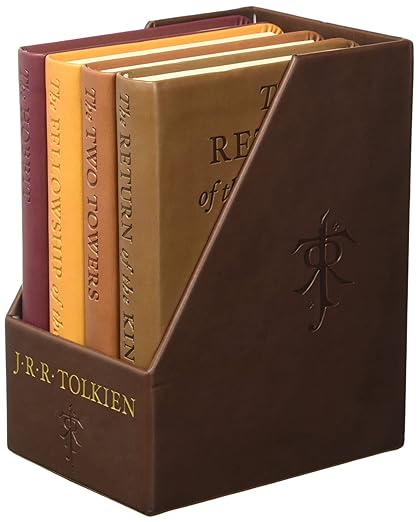
Have you read J.R.R. Tolkien’s Lord of the Rings and the Hobbit? Stay tuned for a story about the Tolkien’s problems in writing the books.
I’m 2,000 words into the writing of a short story inspired by a professor I knew 35 years ago, a book I read 30 years ago, a wonderful church in rural Illinois with a marvelous ministry to down-syndrome and other special-need adults, and the beautiful family in our present church with a special needs son. I wanted to write a story about the remarkable power of special needs children to transform the people around them.
The first 1,000 words were a breeze. The next 500 words were harder. The last 250 words have been a slog. There are also six fragments of ideas sitting at the end of my attempt at a first draft, waiting to be incorporated into the story. And now the well is dry. I am anticipating a story that will be about 10-12,000 words will be needed.
I have never attempted to write fiction. Ever.
I need help.
So yesterday, I turned to my book shelves for help. I have never taken a writing class. Actually, I did take a required English class in my first year of college (Half a century ago!). So the next few weeks will be a writing class from my shelves as I have culled 6 books to be my surrogate professors to teach me what I never had the opportunity to learn earlier.
And I found a gem about the “writer’s struggle” in the very first volume I opened. I don’t claim to be a great writer. I admire a lot of great writers and know that my talents are so low on the totem pole compared to them that I frequently ask myself, “Why try?” But I can’t stop. Writers write because they must. They can’t NOT write. I write because I’m trying to figure out what I think about a myriad of things that I wonder about.
The book is Plot: by Ansen Dibel, is about how to build short stories that don’t . . .
“sag, fizzle, or trail off in scraps of frustrated revision–and
how to rescue stories that do.”
J.R.R. Tolkien has confessed that about a third of the way through the Fellowship of the Ring, some ruffian named Strider confronted the hobbits in an inn, and Tolkien was in despair. He didn’t know who Strider was, where the book was going, or what to write next. Strider turns out to be no lesser person than Aragorn, the unrecognized and uncrowned king of all the forces of good, whose restoration to rule is, along with the destruction of the evil ring, the engine that moves the plot of the whole massive trilogy, The Lord of the RIngs.
Plot, Ansen Dibell, p. 2
What!
Tolkien struggled with writing The Lord of the Rings?
Tolkien didn’t know who Strider was?
Tolkien hadn’t connected Strider and Aragorn in the planning of the book?
Mind officially blown!
And somehow, I am encouraged, that maybe I can bring this short-story to a believable and satisfying end. It won’t be C.S. Lewis, or Tolkien, or Stephen R. Donaldson, or Dostoevsky or Tolstoy or Amor Towles in its literary skill but it might be valuable and worth the paper it is written on.
So, pray for me. The working title is,
“The Gentling”
and the story is about the power of the powerless to transform the lives they touch.

 ChosenRebel's Blog