I’m reading a book on soil. The current chapter is on worms.
Worms fascinate me.
I know. I’m a bit on the strange side.
Last Fall, I told my neighbors that if they didn’t want their leaves, they could just throw them over the fence and I would take care of them. They looked at me and smiled and their faces instantly told me that they thought their neighbor was a bit weird. They have gotten over it, but I suspect their first impression was correct.
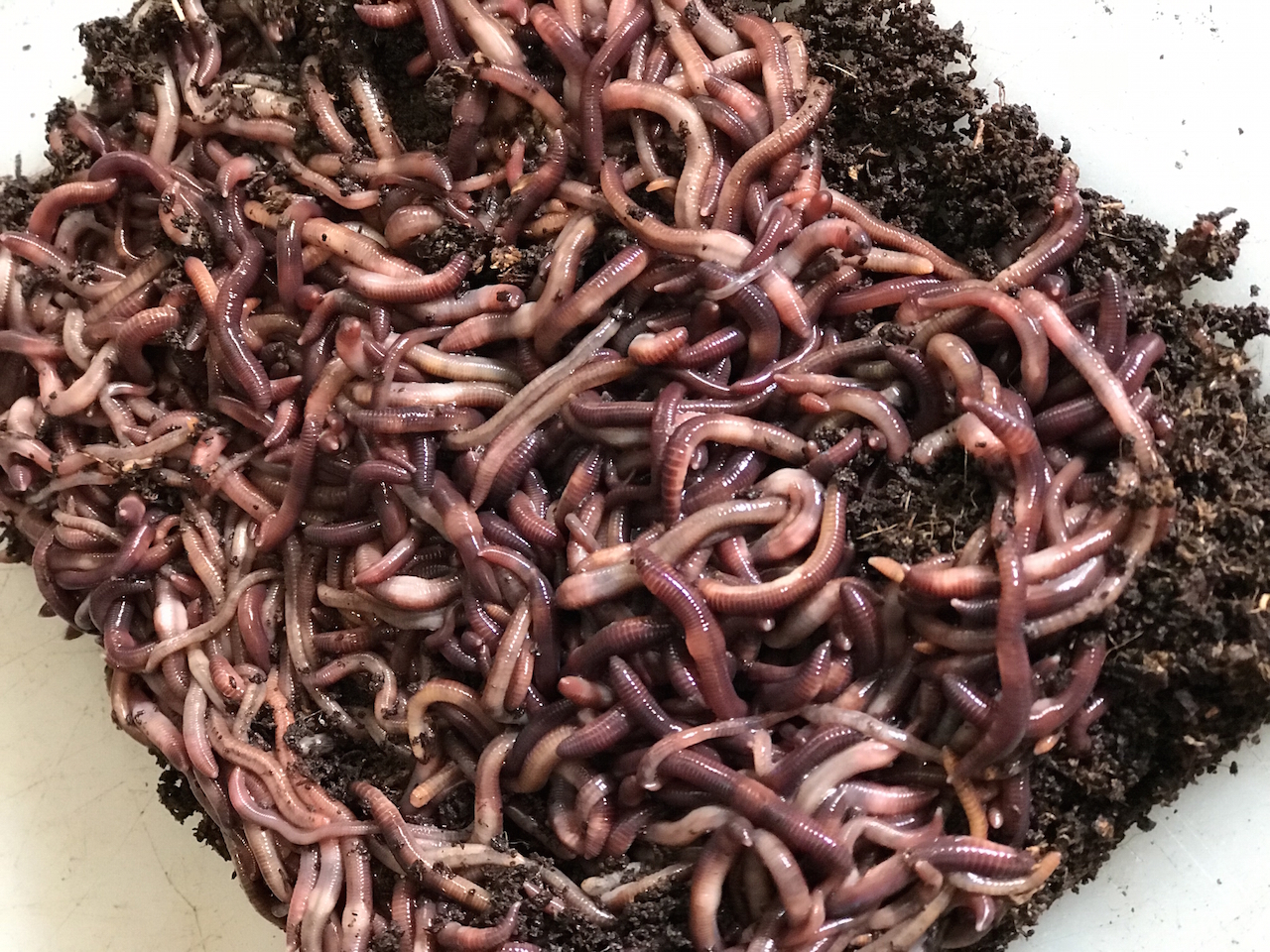
I took their leaves, combined them with my own and corralled them all in two 50 inch in diameter chicken-wire circles on opposite side of my back yard. Each is a little over four feet tall. The next step was to go online and buy $60 worth of red-wriggler worms. They arrived by mail in a small pouch with a bit of soil and compost. I opened the pouch and peered into a mass of about 2,000 tiny, squirmy red wrigglers—-the composting worlds favorite “decomposers”. Here are the pertinent facts on red-wrigglers from a website called ‘Wormmy”.
Size: Up to 3 Inches
Ideal Habitat Temperature: Between 55-77 degrees F.
Ideal Habitat Moisture: Around 70%
Ideal Habitat pH: Between 6.0 and 7.0
Scientific Name: Eisenia Fetida
Other Names: Manure worms, redworm, brandling worm, panfish worm, trout worm, tiger worms.
Ideal Diet: Tea bags, fruits, vegetables, decaying leaves, coffee grounds, egg shells [crushed egg shells], food scraps, and organic waste.
Feed Rate: Eat up to half their body weight daily
Reproduction Rate: Red worms produce 2-3 cocoons per week. Average 3 baby red worms per cocoon.
Days to Reach Adult Maturity: After 90 days.
My soil book, Dirt: The Ecstatic Skin of the Earth, by William Bryant Logan (Norton, 1995), tells me the Charles Darwin, begins the last chapter of his book The Formation of Vegetable Mould through the Action of Worms (1896) with this sentence:
“Worms have played a more important part in the history of the world than most persons would at first suppose.” (Dirt, p. 147)
Indeed.
“In a Danish forest soil, researchers have found a density of one million to one and a half million worms per acre, more than two tons of worms. A rich grassland may bring up more than five hundred worms our of a square-meter hole. This is not so remarkable when you recognize that eight relatively healthy worms will produce fifteen hundred offspring in half a year’s time.” (Dirt, p. 147-148)
Back to those leaf circles.
I stuffed those circles with so much leaf material it became hard as I compressed it, added water to it as I did and hoped to turn it into compost by the next Fall.
Since the Fall I have done two things. One, every week I would feed the worms with kitchen scraps. Two, I took the chicken-wire off the ring once and moved the pile, making sure to take the bulk of the worms and set them aside so that I could put them in the top-middle again. Today, 7 months later, the once 54 inch high pile of leaves has been reduced to just 20 inches and the mass of it it filled with deep, rich dark worm-casting infused new soil and compost for my garden. Amazing. And except for the worms, it cost me no money!
Think about that. A couple of observations:
- It was a relatively slow process.
- It was without any kind of fanfare.
- It was silent.
- It was symbiotic. That is, the worms were not alone. Other bugs and “decomposers” along with beneficial bacteria made the whole process happen. There was a team.
- The only thanks the worms got was the food I supplied to them.
- They did all the work. I got all the benefit in my garden.
“But I am a worm and not a man,
scorned by mankind and despised by people.”
Psalm 22:6
Which reminds me of another story.
I have made 10 different international trips to share the gospel over the years. Without exception, I have always come back sick, taking anywhere from a few days to a month to recover. One year, coming back from Japan, I had a bladder infection that was extremely painful. My doctor, Dr. Jason Dy, diagnosed the problem, treated it, and after about 36 hours, I started to get relief and like I was going to live after all! That Sunday, Dr. Dy was sitting in the congregation as I told the story and told how wonderful I thought my doctor was. Notice, as I told the story, Dr. Dy got ALL the glory, but I got ALL the benefit.

 ChosenRebel's Blog
From another weird one who appreciates soil and worms, thank you for connecting Jesus to the story!
LikeLiked by 1 person
Don’t have a particular fondness for worms, but they are good effective soil workers.
LikeLike