I’ve written about this before here. There is an insidious and popular teaching that has infiltrated the church in our age. It fits the psychological moment of our age. It fits the counseling bent of our culture. it fits the well meaning desire of people seeking to comfort someone (or themselves) after they have acknowledged a grievous offense against God or another.
But it is wrong headed.
(See the link above for ten reasons why.)
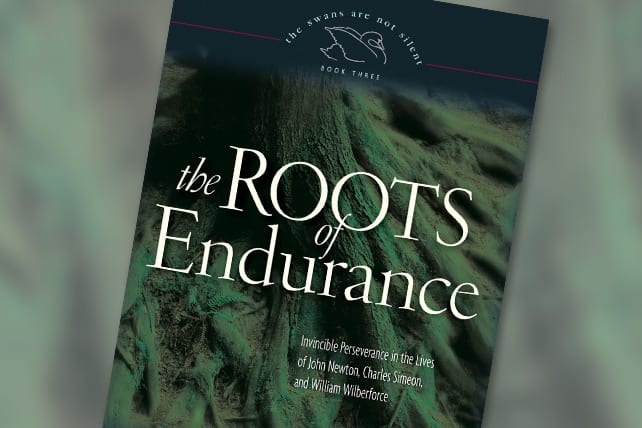
Today, I was reading the book, The Roots of Endurance, by John Piper. It is a book that examines the lives of three men whose lives expressed extraordinary endurance, John Newton, Charles Simeon, and William Wilberforce. I am rereading these mini-biographies because I feel I have a lot to learn from each of these men. I want to, like them, finish my race well.
The book jacket includes this synopsis:
“John Newton, Charles Simeon, and William Wilberforce suffered lifelong opposition and endured for the causes of gospel truth, missionary zeal, and political justice. They found, in solid doctrine and humble joy, the tough roots for habitual tenderness in response to their adversaries — without doctrinal or moral flinching. They are examples of remarkable grace.
John Piper looks at the lives of these three great men and focuses on how they not only endured great opposition, but that they did so with joy and without bitterness. Their lives exemplify how to set a pace and finish the race before us.”
In the chapter on Charles Simeon, I stumbled upon this extraordinary account of Simeon’s life.
The Deepest Root of Simeon’s Endurance
But where now did this remarkable power and all these forms and strategies of endurance come from? Simeon did not respond to trial and suffering the way ordinary humans respond. . . . Beneath the forms of his endurance was a life of prayer and meditation that drew up resources for the battle from some deeper place. Both prayer and meditation were essential to tap the grace of God. “Meditation is the grand means of our growth in grace; without it, prayer itself is an empty service.” 53 A friend of Simeon’s named Housman lived with him for a few months and tells us about this discipline of prayer and the Word.
Simeon invariably arose every morning, though it was the winter season, at four o’clock; and, after lighting his fire, he devoted the first four hours of the day to private prayer and the devotional study of the Scriptures. . . .
Here was the secret of his great grace and spiritual strength. Deriving instruction from such a source, and seeking it with such diligence, he was comforted in all his trials and prepared for every duty. 54 Yes, it was a secret of his strength. But it was not the deepest secret. What Simeon experienced in the Word and prayer was extraordinary. It is so utterly different from the counsel we receive today that it is worth looking at carefully.
Growing Downward in Humiliation Before God,
Upward in Adoration of ChristHandley Moule [Simeon’s biographer] captures the essence of Simeon’s secret of longevity in this sentence: “‘Before honor is humility,’ and he had been ‘growing downwards’ year by year under the stern discipline of difficulty met in the right way, the way of close and adoring communion with God. ” 55 . . . Simeon was utterly unlike most of us today who think that we should get rid once and for all of feelings of vileness and unworthiness as soon as we can. For him, adoration only grew in the freshly plowed soil of humiliation for sin. So he actually labored to know his true sinfulness and his remaining corruption as a Christian. I have continually had such a sense of my sinfulness as would sink me into utter despair, if I had not an assured view of the sufficiency and willingness of Christ to save me to the uttermost. And at the same time I had such a sense of my acceptance through Christ as would overset my little bark, if I had not ballast at the bottom sufficient to sink a vessel of no ordinary size. 56
The Ballast of Humiliation
He never lost sight of the need for the heavy ballast of his own humiliation. After he had been a Christian forty years he wrote: With this sweet hope of ultimate acceptance with God, I have always enjoyed much cheerfulness before men; but I have at the same time labored incessantly to cultivate the deepest humiliation before God. I have never thought that the circumstance of God’s having forgiven me, was any reason why I should forgive myself; on the contrary, I have always judged it better to loathe myself the more, in proportion as I was assured that God was pacified towards me (Ezekiel 16:63). . . . There are but two objects that I have ever desired for these forty years to behold; the one, is my own vileness; and the other is, the glory of God in the face of Jesus Christ: and I have always thought that they should be viewed together; just as Aaron confessed all the sins of all Israel whilst he put them on the head of the scapegoat. The disease did not keep him from applying to the remedy, nor did the remedy keep him from feeling the disease. By this I seek to be, not only humble and thankful but humbled in thankfulness, before my God and Savior continually. 57
If Simeon is right, vast portions of contemporary Christianity are wrong. And I can’t help wondering whether one of the reasons we are emotionally capsized so easily today—so vulnerable to winds of criticism or opposition—is that in the name of forgiveness and grace, we have thrown the ballast overboard. Simeon’s boat drew a lot of water. But it was steady and on course and the mastheads were higher and the sails bigger and more full of the Spirit than most people’s today who talk more of self-esteem than self-humbling.
John Piper. The Roots of Endurance: Invincible Perseverance
in the Lives of John Newton, Charles Simeon, and William Wilberforce.
(Kindle Locations 1582-1604, underline and color emphasis added).

 ChosenRebel's Blog