Thursday is for Discipleship
The day would end with Peter walking on water but it began with John’s head on a platter.
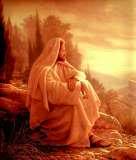 His cousin had just been brutally murdered and he knew that his own brutal death was approaching. When the news came, he wanted to get away so he withdrew to a place of solitude, a place to contemplate and pray.
But the crowds found him.
So in between the death of John and the walk of Peter, 5000 people were fed and teaching resounded through the hills of the Jewish countryside. At the end of the day, exhausted, the man who was God, the man who robed his glory in flesh so that we could see and yet live, a man with dirt between his sandaled toes, still sought a private place to pour out his grief in the loss of John.
The disciples are sent away on a boat. He climbs a mountain, alone, and prays. You know the story. You can read it in Matthew 14. In the fourth watch (3 AM) he comes to a boat of fearful men on a storm-tossed sea and bids Peter to walk on water. And he does.
But I am entranced by the lonely climb up the mountain. Communion with the Father was important to Jesus, the Son. I want that to sink into my spirit. I want that to be the leaven that permeates and pervasively influences the whole of my life. I want to know the desperate need of my heart for communion with God. I think that is where real discipleship begins.

 ChosenRebel's Blog
I have always been fascinated as well by the times in the Gospels where Jesus is seen prioritizing time alone with the Father. I agree that the human soul desperately needs and deeply longs for true and intimate communion with God. The question I have concerns Jesus’ reaction to the interruption of his pursuit of solitude and time alone with the Father.
When my own efforts to spend time alone with God are interrupted (by a crying 10 month old or a disobedient 3 year old or anything else) I find myself getting quite frustrated. Marty, do you think Jesus was frustrated at all by the crowds that followed him in Matthew 14:13? Amazingly, it seems that Jesus was not frustrated at all, but rather was filled with compassion to the point of ministering to the crowd and healing the sick among them (v.14). How is this?
What is it in me that keeps me from responding to my own children or spouse with compassion when I am interrupted from communion with my Lord? What does this text teach us about being flexible with our devotional time with the Lord? It seems important that Matthew 14:22ff show Jesus ending the time of ministry to the crowd dismissing them and sending the disciples off. Though he was interrupted by the crowd, he did not neglect his original purpose in seeking solitude and communion with the Father.
LikeLike